

The OES visited Marietta in Washington County on June 16, 2001. We originally visited Marietta to take photographs of the Indian mounds and a cemetery there, but we were so intrigued by all of the historical places that we decided to take a few pictures of them. A brief description of the location is included with each photo. Marietta is a must-visit town if you are into history and historical places. It seemed like we bumped into another historical plaque every time we turned around.
Location Information: City
Marietta is located off Interstate 77 at the Ohio River; Washington County.
Photographs
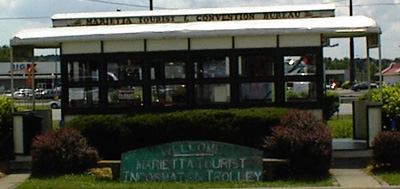
The Marietta tourist trolley.
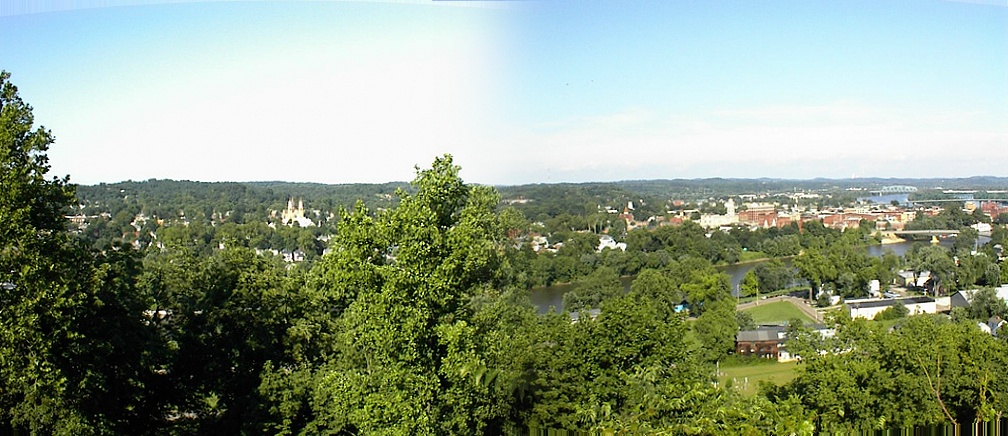
Marietta as seen from Lookout Point.
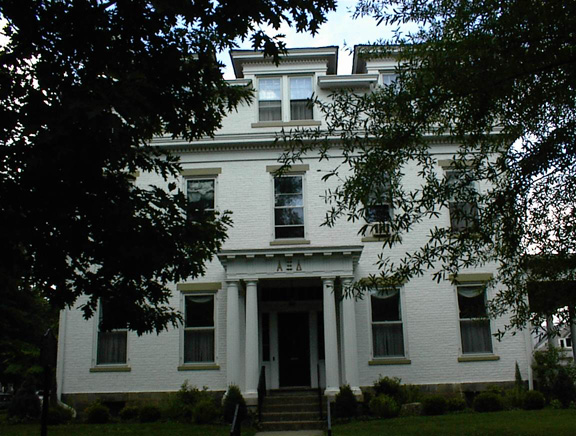
The George White House was built in 1855. In 1908, it was bought by George White, who served as Ohio's Governor from 1931-1935. Now the Alpha Xi Sorority house, George is said to haunt the second floor.

Marietta College's Erwin Hall is the oldest building on campus. It was built between 1845 and 1850.
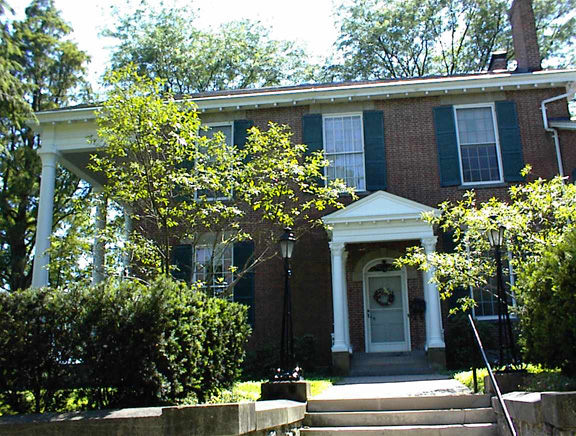
The Mills House was built in 1822. From 1836-1936, Col. John Mills and his sons lived in the home. It has been the home of Marietta College's presidents since 1937.
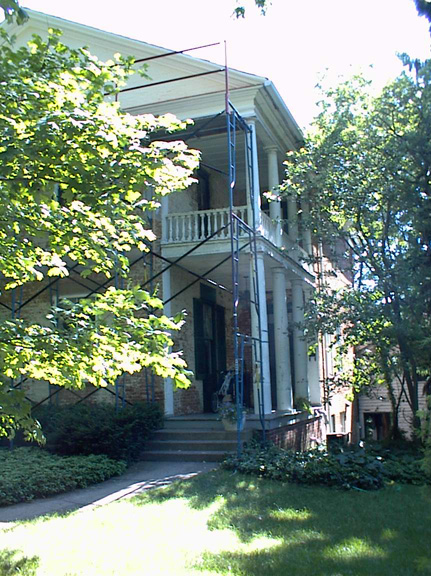
The House of Seven Porches was built in 1835 by a Marietta College professor. It is also known as the Buell or Kelso House. The house was undergoing a renovation when we visited.
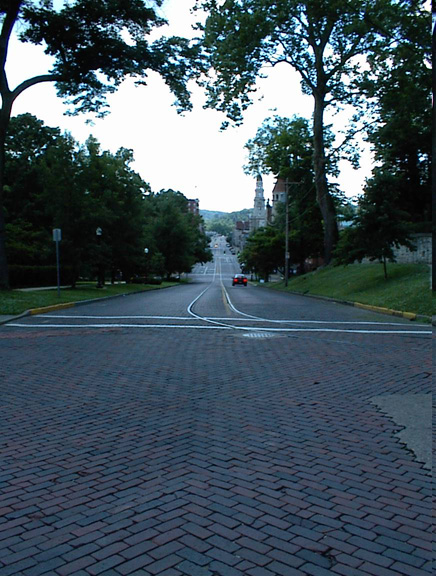
Some of Marietta's remaining trolley tracks. The tracks are no longer used.
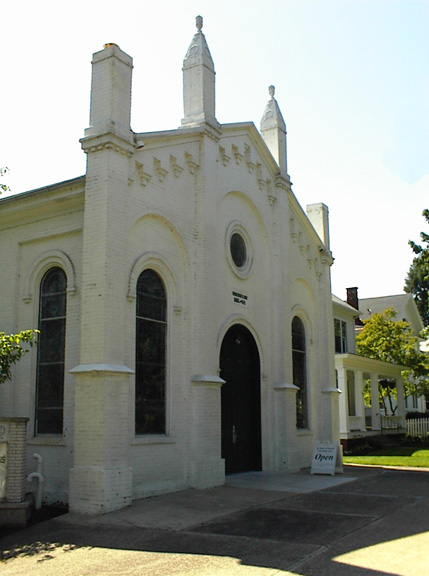
St. Paul's Evangelical Church is Marietta's second oldest church, built in 1849. Originally the German Evangelical "Kirche," the name was changed to St. Paul's in 1872. English sermons were first given in 1909. The church was still active when we visited.
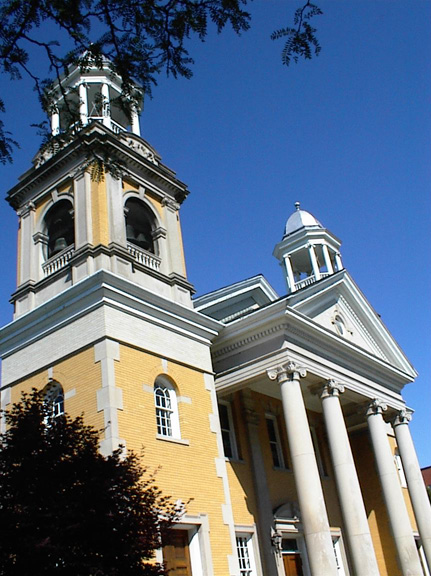
The First Congregational Church was the Northwest Territory's first organized church, chartered in 1796. Using Rufus Putnam's "Two Horn" plan, the church was dedicated in 1809. The first building burned to the ground in 1905 and the church pictured here replaced it in 1906.
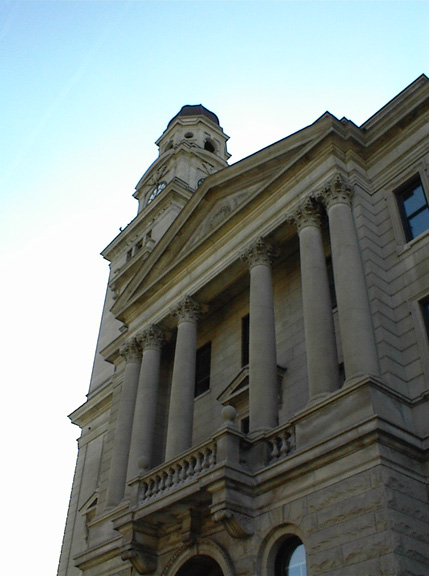
Three courthouses have provided government services for the one-time largest county in Ohio since 1797. The building here, built in 1902, was the courthouse in use during our visit.
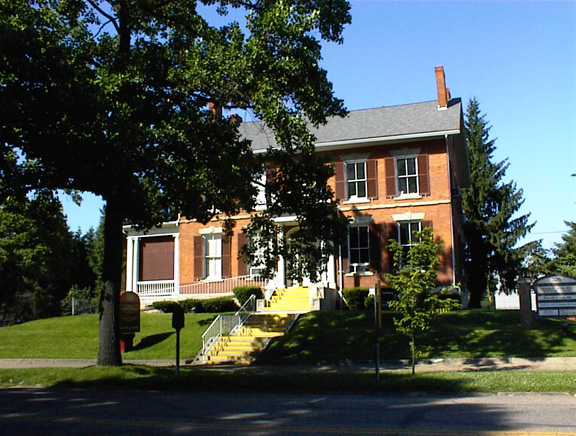
Built in 1802, the Meigs House was built for Return Jonathan Meigs, Jr. He served as Ohio's first postmaster, fourth governor, US Senator and Postmaster General.
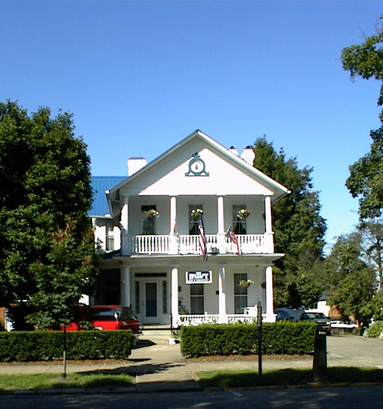
The Buckley House was built in 1879 for the granddaughter of Dudley Woodbridge, one of Marietta's first merchants and an early judge. It was a bed and breakfast when we visited. The building is said to be haunted by the ghost of a Chinese exchange student who killed himself by drinking chloroform.
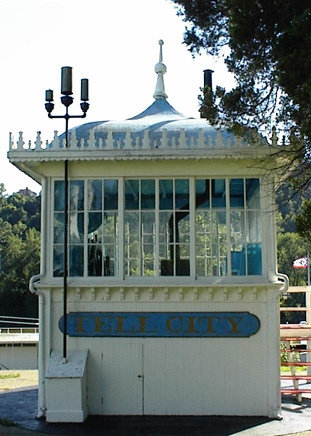
The Tell City was built in 1889 to carry passengers and freight on the Ohio River. On April 6, 1917, the ship sank after an accident in Little Hocking, Ohio. The pilothouse was removed from the wreckage and was used as a summer home for a while. It is now the oldest surviving pilothouse of its kind.
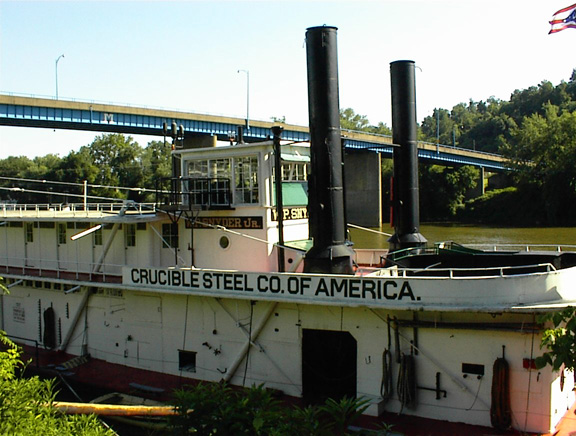
This was the steam towboat W.P. Snyder, Jr. It is one of the last remaining Mark Twain era steam towboats used on the Ohio and Mississippi River system during the past century.
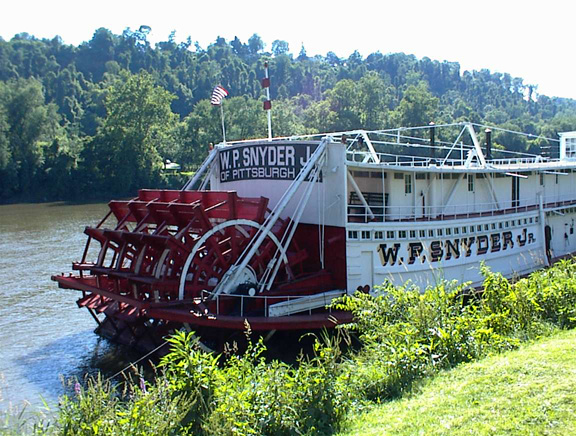
Being at the Ohio River Museum, you may take tours of this towboat. We missed the last tour of the day by 20 minutes when we visited.
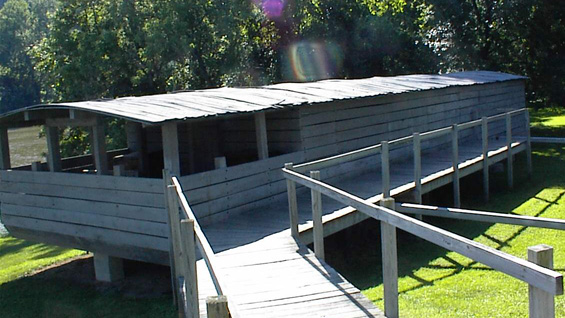
This restored canal boat was used to transport goods on the Ohio-Erie Canal. Sections of the canal and its locks are also featured on this website.
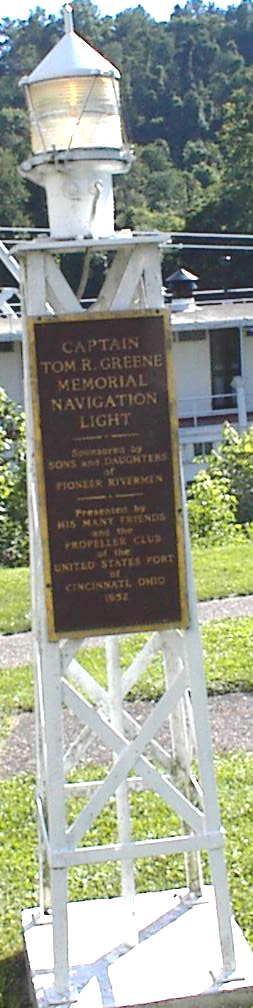
The Captain Tom R. Greene Memorial navigation light. Tom Greene was president of Greene Line Steamers, now the Delta Queen Steamboat Company. He purchased the Delta Queen steamboat that ran on the Mississippi and Ohio Rivers.
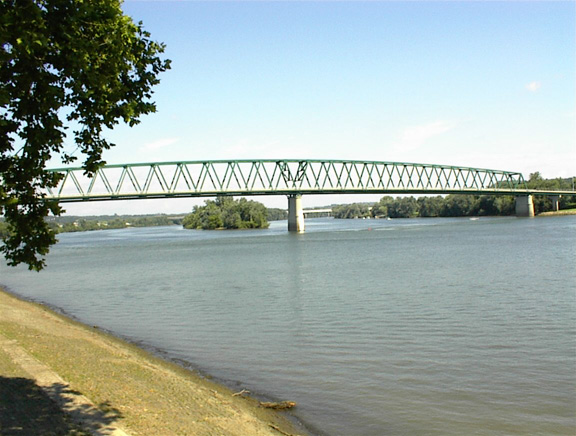
This bridge spans the Ohio River, connecting Ohio to West Virginia.
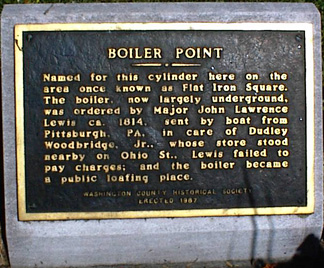
Boiler Point, where a large boiler stood in 1814. It became a hang-out for locals when it was not paid for after delivery. It is now underground.
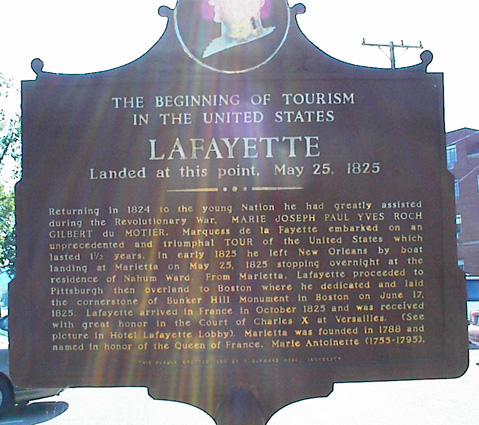
This historical plaque was dedicated to Marquess de la Fayette, who was the first person to tour the United States in 1824. His tour lasted a year and a half.
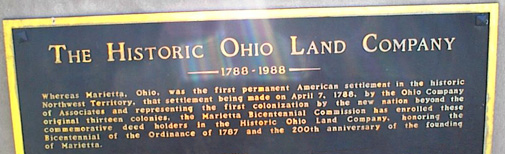
A plaque for the historic Ohio Land Company. The plaque went on to list all of the original deed holders of Marietta. This was the first settlement beyond the original 13 colonies.
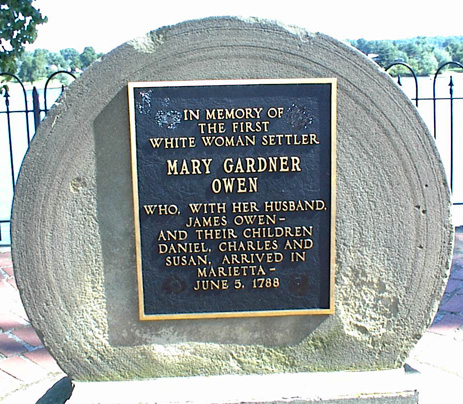
This old grinding stone was dedicated to the first white woman settler, Mary Gardner Owen. She settled in Marietta with her family in 1788.
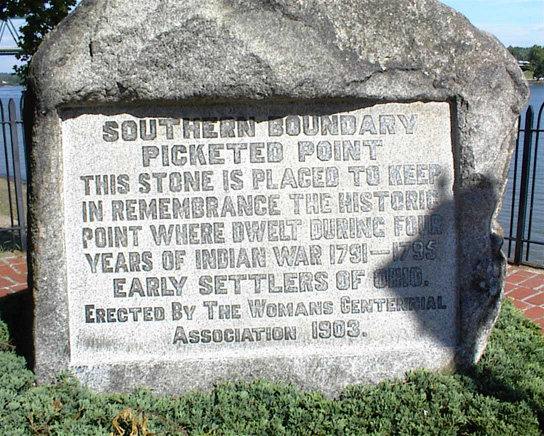
This was the Southern Boundary Picketed Point during the four years of the Indian War.
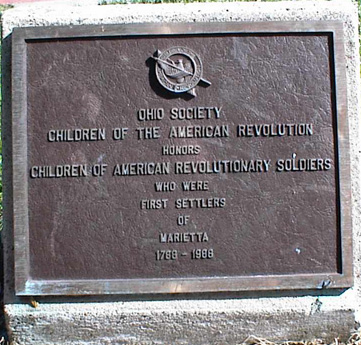
This plaque was dedicated to the children of the Revolutionary War who were among the first settlers of Marietta.

Just beyond this sign was a public landing where the roadway extended down to the Ohio River. For more than 100 years, this was the place where goods were exchanged.

An early pioneer map of Marietta circa 1792. It showed the original contents of the town on this plaque.
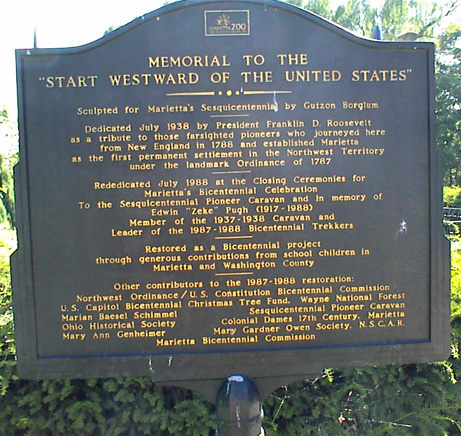
This plaque was in Muskingum Park. Presidents Theodore Roosevelt and W.H. Taft spoke here in 1912. In 1938, President Franklin Roosevelt dedicated the "Start Westward" monument pictured. It was rededicated in 1988.